Just about any layperson you talk to will say the 1970s had the best decade for music. I get it, the highs are emphatic. Fleetwood Mac, Led Zeppelin, Stevie Wonder, and Pink Floyd are truly good enough to listen to for the rest of your life. We will not be going over any of that, nor will we be going over anything that would play on your typical local classic rock radio station. I’ve spent a significant amount of time listening, and re-listening to many artists & albums from the 1970s I had never heard, either from the underground or lost to the contemporary passage of time. Some artists, like Steely Dan and Neil Young, have survived in the public eye since, but I have never in standard experience come across many of these albums without intention.
You could spend an entire lifetime dedicated to the 1970s. Across the world, new instruments and technology were being sent into their native studios. Many albums sound almost juvenile compared to what came later. Digging through the undercarriage of album aggregators for the last 6 months has been fun, but so many albums are damaged by inexperience.
A few of these albums & artists are 100% stuff I should have heard previously. We all have our blind spots, and I think mind will be pretty apparent as this list goes on.
Overarching Themes
If you ever really dig under the hood of the 1970s, you’ll end up with an unbelievable appreciation for Pink Floyd. So many bands from this era had no idea how to make guitars sound remotely good. Many of the albums have guitars guitars that sound awful. They’re covered in sludge, played horribly, or are put through some type of amp that very clearly hates the strings. Space doesn’t exist, and many of the multi-guitar albums are borderline indecipherable. It’s easily the largest trend for non-radio friendly stuff. Outside of that, here’s my other high themes from the decade:
- Progression through the decade is also ridiculous. It’s wild to hear something from 1972 vs. 1975 and realizing it sounds like worlds moved between those three years. By the latter portion of the decade the “classic rock” sound so many of us grew up with borderline doesn’t exist but there’s a really sick alternative sound brewing. A bunch of the early punk bands put out some really great albums, and I’ll be writing about so many of them here.
- Brian Eno is incredible. I really cannot understate that. I do not know how he sounded like that in the 1970s. Truly a visionary artist that demands respect. Just about every other fabled minimalist or ambient artist from this era genuinely and truly sucks.
- Black artists dominate the 1970s. The early 70s contain some of the greatest jazz & soul music I’ve ever heard. I’ll write about a few of these, but any major publication that doesn’t discuss black pop or soul in their retrospectives should be entirely disqualified.
- There’s an exceptional amount of true garbage that got filtered out. Some publications have tried to canonize a few albums, but they’re absolutely unlistenable in modern times.
Album Selection
Most of the stuff on here has either been recommended to me from others, sold well in it’s era, or was rated highly on some form of an aggregator. There’s probably another 30 records I spent time with that bored me to being mute on their existence. There’s only two artists on here that survived on modern classic rock radio – Steely Dan and Neil Young – as it was the first time I spent with their highest acclaimed albums.
Part 1: Leave It Behind and Bury It
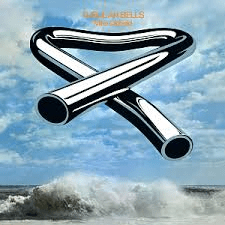
Mike Oldfield – Tubular Bells (1973)
I swear to whichever higher power exists, this entire album sucks so hard it makes the Hoover Vacuum look like a mop. I do not care Mike Oldfield was 19 when he made this. It has survived time by being The Exorcist theme song. Outside of that memorable instance, which is within the first few minutes, Part 1 bored me to a point of exhaustion. Over twenty-six minutes of boring pompous uninteresting instrumental. If that was all it was, I wouldn’t care that much. That isn’t enough to make this album truly be horrible. Part Two. Part Two is almost entirely shadowed by neanderthals grunting and huffing for a significant portion. If anyone tells you it’s “so trippy” or “soooo out there” they are quirk chungusing themselves. Tubular Bells isn’t worth the polyvinyl chloride it was printed on, and it’s not worth the mb worth of storage streaming services have dedicated to it. An exceptional waste of mine & everyone else’s time that would have been better spent doing anything else.
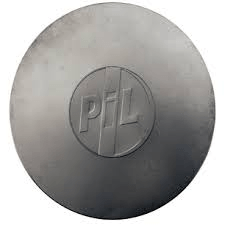
Public Image Ltd. – Metal Box (1979)
I will be so incredible straight up: this is a recap of the streaming release titled Second Edition. In 2026, it’s the most common way we listen to music. Also in 2026, I cannot fathom anyone remotely dedicating time to listening to the digital edition. #They compressed so much and completely reorganized the track list to ruin whatever interesting factors the record might have had. The 3×12 vinyl format and layout allows you to actually enjoy the release, as all of the genuinely horrid portions are packed onto the 3rd disc. If you stream this, you’ll be bored to tears and end up absolutely hating the extremely dated guitar work by the end. About half of the songs sound almost identical and overstay their welcome. It’s not worth it in the modern time to press play unless you have an original pressed physical copy, otherwise it’s exceptionally tripe.
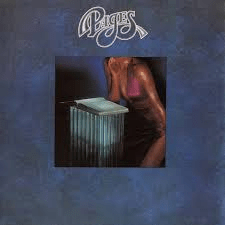
Pages – Pages (1978)
Yatch rock, as a sound, has been veneered by younger generations entirely due to how easy it is to forget you’re listening to music. Pages is a great reminder there’s truly only 20 songs in that style that have stood the test of time, and every one of them should be on a cocktail hour playlist underscoring conversation. This is white washed attempt at everything that makes disco so special. When Pages hits, it decides to throw away the magic moments immediately and return to living room dance moments as fast as it can. Is the saxophone on It’s Alright good? Yes. Is it worth the soulless vocals or tv-acceptable performances on the rest of the record? No. Rather, it’s a reminder pop music from yesteryear also sucked. Pages eventually turned into Mr. Mister, which purely exists to commercialize bad songs.
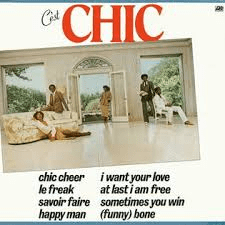
CHIC – C’est Chic (1977)
How to listen to C’est Chic:
Steely Dan – Aja (1977)
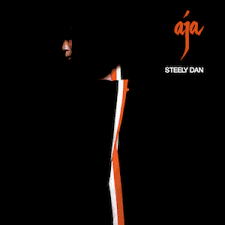
Incredibly horrible with no moments more memorable than a childhood splinter. Abject waste of hearing, and boring to the point of dissociation. Anyone that has this album in their canon is either lying or lacks the capacity to have taste. Disrespectful to the listener and audience, while cosplaying broad appeal. Disgusting, repulsive, unpalatable, vile, and odious through and through.
Part 2: One Step Above the Floor Tier
Gentle Giant – In a Glass House (1973)
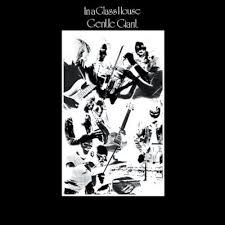
Album cover goes insanely hard. Gentle Giant are a cult-classic progressive rock band out of England. Their largest issue is being entirely outclassed by other progressive rock bands and other cult-classic groups from the same era & country. In a Glass House shows a few glimmers I find enjoyable, but mostly feels like a record made for annoying guys that say “hobbitses” unironically. None of the moments on here truly pay off, and vocally sounds like a continuous look-what-I-can-do performance. The two folk songs unironically are the most memorable moments as the rest of the jazzy extended songs lose focus numerous times throughout.
Neil Young – Harvest (1975)
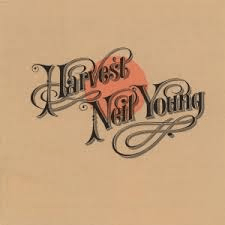
I love some Neil Young songs. I love many a Neil Young album. I do not like Harvest. Many of these songs are mixed in a way the instrumentals and vocals are at odds with who is under the limelight. The final product crumbles under the weight of it’s own highs: Old Man, Heart of Gold, and Words are all timeless demonstrating how peerless Neil Young was. Seven other songs are unnamed, many of which can remain as memories. Maybe it sounds better on wax, but the transitions between songs are also extremely dated and are borderline jarring as a continuous experience. For some odd reason, from 96 – 03, tons of digital publications kept ranking Harvest higher and higher, including Rolling Stone placing it at #78 all-time. I much prefer Tonight’s the Night or On the Beach.
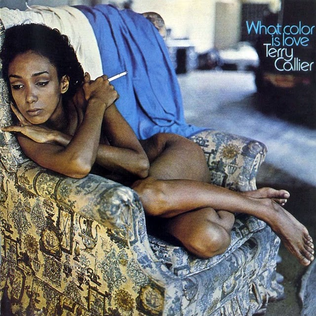
Terry Callier – What Color is Love (1973)
Many highs on What Color is Love unfortunately hit an Irish goodbye before you can truly appreciate them. In another world, this is a soundtrack to a grand adventure. In this world, a few of these songs sound as though they’d be pressed on dusty ’45s at your local Goodwill™. The overall experience has a few interesting tunes, like Ho Tsing Mee, which features Terry’s voice distorted. If you wanted to dig into soul music but want to hear it bent into funk and folk, What Color is Love is an interesting albeit dated time capsule.
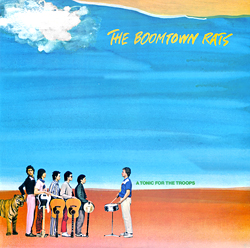
The Boomtown Rats – A Tonic for the Troops (1978)
New-wave enjoyers be like “no it’s supposed to sound that way.” A few of the choruses on here are really tight and melodic, and then the group decides to get exceptionally theatrical and do a YES interpolation. It’s included here as a great look at how radically different pop music was shifting by the back end of the decade and glimpsing into commercialized new wave. If you want to experience a rock album that features harmonies, numerous guitars that are actually decipherable, and a few motivated drumming performances, A Tonic for the Troops features a few pretty sick free-form oddball tunes. The run from Me and Howard Hughes to (Watch Out for) The Normal People contains a few head nodders.
Part 3: What the hell, Sure.
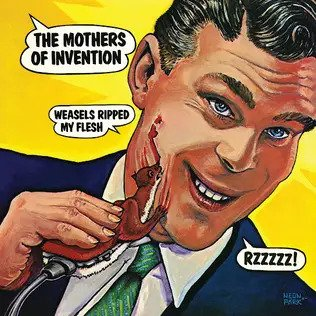
The Mothers of Invention – Weasels Ripped My Flesh (1970)
On my first listen I unprompted texted a friend lamenting much I hate Frank Zappa. This 39 minute experience packs every single genre (including those that didn’t exist yet) on it. The second song features a violin going ballistic the entire time, no breaks whatsoever; it is immediately followed by Prelude to an Afternoon of a Sexually Aroused Gas Mask which ruins my day whenever I think about it. The fourth tune, Toads of the Short Forest is a really welcoming & enjoyable folk song! That is, before it turns into a horror avante-garde jazz performance where Zappa tells us every instrument’s time signatures (they’re all different btw). Get a Little is a not-subtle reminder every musician from this era is a horrible person. The Eric Dolphy Memorial Barbeque is a horror soundtrack. Dwarf Nebula Procession March & Dwarf Nebula is entirely incoherent (complimentary). My Guitar Wants to Kill Your Mama is a radio rock song with PG13 lyrics, easily the most accessible portion of this entire experience. Oh No is a yacht rock song. The Orange County Lumber Truck rips. Weasels Ripped My Flesh is 2 minutes & 4 seconds of pure harsh noise that would make a Swans fan blush. I have not, nor will I ever forget Weasels Ripped My Flesh, and on repeated listens I have enjoyed it more and more. As I enjoy this more, my hatred for Frank Zappa grows and grows.
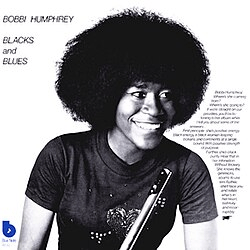
Bobbi Humphrey – Blacks and Blues (1973)
Jazz flutist Bobbi Humphrey’s playing is so undeniably enjoyable it makes Blacks and Blues float effortlessly through it’s entire run time. While the experience may barely overstay it’s welcome and isn’t exceptionally dynamic, you’ll find yourself longing for a few of these melodies to soundtrack your happiest moments. It flows endlessly, and sounds truly timeless. Smooth for the sake of it, no moment’s wasted.
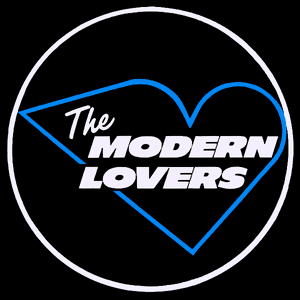
The Modern Lovers – The Modern Lovers (1976)
A few members of The Modern Lovers ended up joining bigger bands – notably The Cars & The Talking Heads. In 1976, they were singing about hyper-specific areas in Massachusetts and locked in a truly awesome alternative rock experience. Have you ever desired to hear college kids make alternative rock songs in the style of The Doors? Here it is! Guitars activate and change tone so often it’s almost hard to keep track. Lyrically… it’s 45 minutes of a Boston guy describing why everyone hates him but also talking about walking to the MFA or driving on Route 1. Who knows how all of this comes together, but it’s an overall enjoyable experience. In 2003, it was reissued a second time with I Wanna Sleep in Your Arms, which is unironically the best song on the experience, officially released 27 years after the original project. Boston’s best venue, Roadrunner, is named after the first song on this bad boy (which is easily one of the worst on the album).
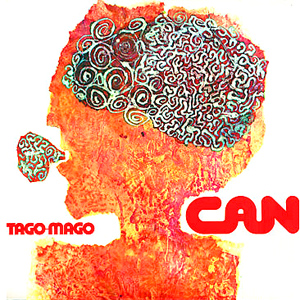
Can – Tago Mago (1971)
There are more memorable moments on Tago Mago than most artists have in their career. It’s not approachable, especially with the insane song lengths. So many artists in the 1970s end up having ego crises trying to expand their sonic palate, yet Can sounds 20 years into the future. I don’t necessarily enjoy Tago Mago, but I find myself continually revisiting the open structured portion in the middle (Aumgn sounds like a jazz Moby Dick). Peking O is straight up unlistenable.
Part 4: Recommended Listening
Everything here on
I like as much, or more than
Dark Side of the Moon
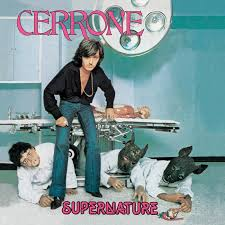
Cerrone – Cerrone 3: Supernature (1977)
I imagine Supernature as a vinyl, with songs 1-3 being A and 4-6 being B. With that image, this is one of the funniest disco projects I’ve spent time with. Side A features a near perfect 10-minute dance song, Supernature, a drum interlude, and a space exploration. Side B starts with a truly perfect tune, Give Me Love, and manages to never take it’s foot off the gas. The transitions from Give Me Love into Love Is Here and Love is the Answer are so smooth, so meaty, and so precise you could create an entire genre out of them. Maybe someone did, and they named it after a brick house in Chicago or something. Unless you’re intently awaiting song breaks or loads, it’d be hard to tell when the songs change. All 16 minutes on B are perfect, and are a better use of 16 minutes than just about any pop music released after 2006.
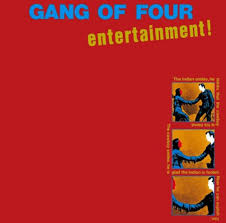
Gang of Four – Entertainment (1979)
Guitars intentionally sounding bad but played good! If you need your rock to be political, toned down drums, and punchy bass, Entertainment will keep you satisfied for a lifetime. Most of the guitar riffs on here are extremely jarring, which makes tunes like At Home He’s a Tourist so much more satisfying. Entertainment doesn’t contain your standard ABABCB song structure, and rather lays a far more interesting blueprint for indie rock. It also has some really goofy lyrics like “Nicotine really goes to my head, light myself another cigarette! Light myself another cigarette!” Entertainment is the latest album released in the 1970s that I truly enjoyed, and is the only one with muddy guitars I still found enjoyable.
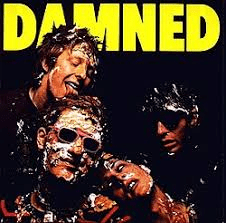
The Damned – Damned, Damned, Damned (1977)
Through this months-long delve into the 70s, there was no band I enjoyed more than The Damned. Damned, Damned, Damned is so effortlessly cool with shell-shocking pace; no song remotely overstays it’s welcome. Most songs barely stay long enough to take their coat off. Guitar solos rip over crash leads, and the band is in a full blown sprint against each other. Miracles of melody happen at a speed like this, and it’s a true blessing how coherent the entire experience lands. Some of my favorite guitar solos of the entire decade are on throwaway tunes on here — Fish is 1:37 in length and has a scratching solo that would make Kirk Hammett blush. I’ve known The Damned as the 80s goth rock group (sensational), and little did I know their late-70s contributions laid the groundwork to hardcore and metal. Damned, Damned, Damned rips, and I’m grateful for my local record store guy for recommending it.
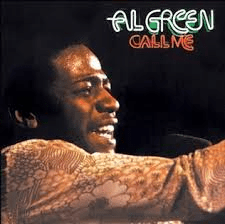
Al Green – Call Me (1973)
There’s a common sentiment that ‘pop music today is worse than back then.’ I won’t attempt to refute it, but through this exercise I did long for the diverse instrumentation on these classic pop soul albums. Call Me is juicy, with every note as punchy as it is groovy. From 1969 to 1975, Al Green released an astonishing 8 albums. Call Me is the top of his mountain, a height so high you’ll give yourself vertigo if you compare it to modern contemporaries. Even the dated songs & structures (a lot of soul/disco is really, really dated) are enjoyable to a modern palate. Al Green carries many of these songs with his luscious vocal performance, and the rest of the band is enchanted by his driven nature.
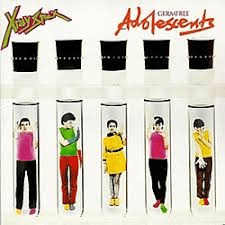
X-Ray Spex – Germ Free Adolescents (1978)
Germ Free Adolescents is an exceptionally interesting experience. In some sense, it almost sounds like they were attempting to invent ska before ska was a thing. Every one of these riffs is better than 90% of their male contemporaries, and even in the slower moments you’re catapulted into a personality-driven rock show. ‘Side A’ is perfect, and Side B has numerous songs that are as hilarious as they are nose down low rock tunes. You’ll hear random calling cards like ‘My mind is like… a plastic bag!‘ immediately before ripping into an assault of noise. Every word written about the Sex Pistols should also be applied here.
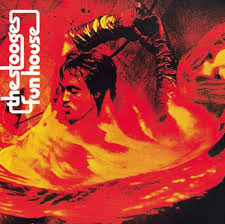
The Stooges – Fun House (1970)
One of the few albums I dug into during this entire decade where I truly enjoyed the guitar work. Fun House is not made for arenas or to be palatable for radio, rather it’s made for listeners of any era to find it when it’ll hit the most. For me, that was a brisk fall night in Boston Common eating a burrito. Iggy Pop sounds possessed, as if these songs were therapy. Throughout all 36 minutes, the band never once stops ripping. Both guitars are tuned perfectly, mixed wonderfully, and compliment Iggy’s demented performance. Even middle cuts like T.V. Eye are mixed in such a unique way you can’t help but dig your attention deeper. The second half features real true expressionist punk music, borderline freeform solos, and a saxophone full blown sprinting over a band in peak form. One of the best albums I’ve ever heard, and all 7 of these songs should be in the canon of classic rock. It’s a failure of VH1, MTV, and local classic rock radio they are not.
Additionally, it’s *insane* how many publications don’t list The Stooges as one of the greatest American bands. I’ve heard and read numerous publications say Van Halen or Aerosmith, and both answers truly repulse me. The Stooges’ 3 album run from 1969 – 1973 is greater than both of those bands’ entire careers, and should put them immediately in the conversation.
Part 5: The Really Special Stuff
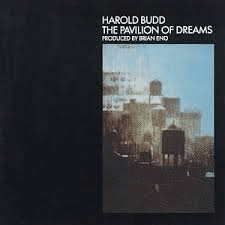
Harold Budd – The Pavilion of Dreams (1978)
A soundtrack to another world, a door with sun-drenching light shimmering around it, a cafe with enough warmth your cheeks blush, and the soundscape to remember this medium has and always will be worth it. May it soundtrack Sundays you feel comfortable, commutes you despise, and weather you can feel.
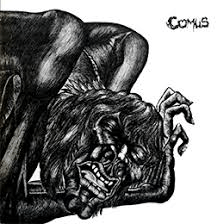
Comus – First Utterance (1971)
A godless experience, First Utterrance is horrified by the idea of salvation. It is an auditory psychotic, possessed by it’s own madness and melodically sacrilegious. Enjoyment of the experience in and of itself is a sin, lured by the enchantment of your own hedonistic desire of the occult. Folk is pushed to the boundary of contemporary understanding destructing your own idolatrous interpretation of acoustic limitations. Each song could enchant a false idol and sounds as though it’s own endeavor is to conjure one.
I have not heard anything that has sounded anything like this, but it will lead into more dedicated time toward the avant-folk groups in the 60’s and 70’s later on. It has also spurred an insatiable curiosity into droning Irish folk music that has me listening to artists with >1300 spotify listeners.
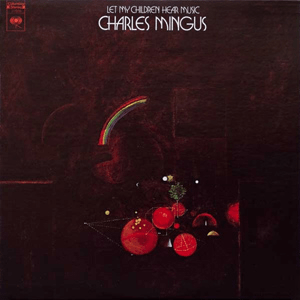
Charles Mingus – Let My Children Hear Music (1972)
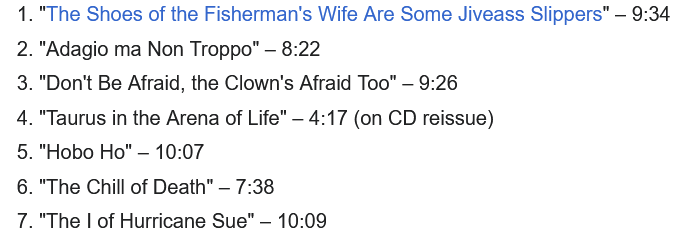
Charles Mingus, they’ll never make me hate you and your half dozen of classic records. For anyone that’s even an adjunct jazz fan, give this a spin and skip Taurus in the Arena of Life until you’re done with the listen. Songs 1-3 and 5-7 are perfect. Here’s the track listing, and that’s by far the least interesting aspect of this experience.
Minnie Riperton – Perfect Angel (1974)
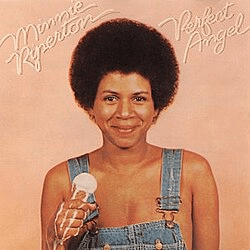
The performances on Perfect Angel entangle each note in such lush texture you’d be hard-pressed to find a better produced record in the 70s. It feels as though prime Stevie Wonder ghost wrote the project, with some truly sensational individual performances stretched throughout the entire 37 minute run time. On It’s So Nice the piano is unleashed while a cavalry of other instruments layer your experience. Even the most dated songs have redeeming qualities, and Minnie’s voice is emphatic enough to carry you through any semblance of a lull. Perfect Angel made it to #4 on billboard, and is easily the most enjoyable listen from the best-selling albums in 1975.
Curtis Mayfield – Curtis (1970)
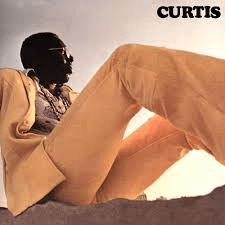
This is one of the greatest & grandest albums ever recorded. I am incapable of writing about the grandeur on Curtis. Instead, here are some quotes I found that I unanimously agree with:
[The Makings of You’s] innocence drips from every note and that allied to his gently romantic falsetto creates a love song for the ages—a song so good that the greatest singer of all time, Aretha Franklin, would cover it later – Albumism
Curtis isn’t afraid to test the boundaries of his work, be it on either the more abrasive side or the one with more layered orchestration, resulting in material that ranges from his angriest (“Hell Below”) to his most dense and colorful (“Move on Up“), to songs that are darker and more subtle in their skewed sonic approach (“The Other Side of Town”). – Treblezine
The importance of [Curtis Mayfield]’s message sometimes overshadows the density of the actual music. Curtis is a lush, thick record that not only supports a healthy dose of social commentary, but also embraces the listener in a distinctive, velvety swathe… – Tinymixtapes
I hope you can find an album or artist from this bunch that will have you dig into the unsung 1970s sounds that have been left behind by digital media. Thank you for reading 🙂

 M&Ms: Music + Movies + Etc.
Leave a comment